
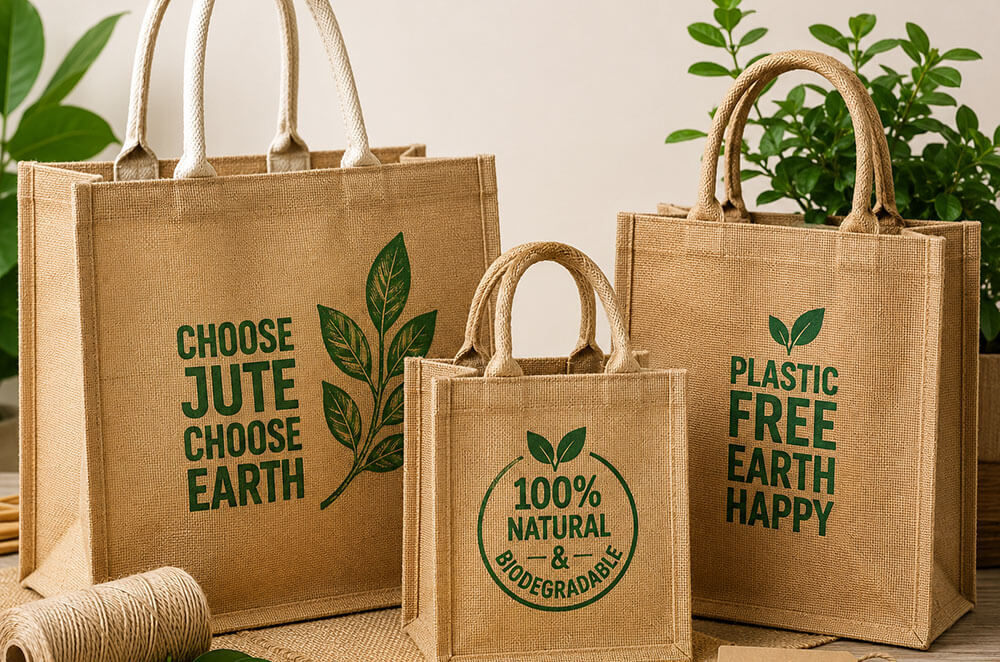
Jute shopping bags have become one of the most visible symbols of responsible consumption, and for good reason. At a time when the world is rethinking single-use materials and waste-heavy habits, jute offers a practical, natural, and credible alternative. Made from plant fibre, jute bags fit naturally into the growing preference for products that are reusable, biodegradable, and better aligned with the long-term needs of the environment. Their popularity is not simply about appearance or trend. It is rooted in the fact that jute helps answer a very real question facing businesses and consumers today: how can everyday products become more sustainable without losing function or value?
One of the strongest reasons jute shopping bags are considered eco-friendly is that jute is a natural and renewable material. The fibre is obtained from the jute plant, which grows relatively quickly and is widely cultivated in South Asia, especially India and Bangladesh. Unlike petroleum-based materials used in plastic bags, jute comes from an agricultural source that can be grown again and again. This makes it a more responsible raw material for businesses and consumers seeking alternatives to synthetic packaging. As a natural fibre, jute also supports the wider shift towards materials that are closer to the earth and less dependent on fossil-fuel-based production systems. Sources commonly note that jute is biodegradable, reusable, and cultivated with comparatively low resource intensity, which is why it is widely presented as a sustainable packaging material.
Another major advantage of jute shopping bags is that they are built for repeated use. This is a critical point in any sustainability discussion. A bag that is used once and discarded, even if it is technically recyclable, still contributes to a culture of waste. Jute bags are different because they are designed to be used many times. They are strong enough for daily shopping, grocery carrying, gifting, and general utility. Their durability gives them a practical edge over thin plastic bags, which often tear easily and are quickly thrown away. The more often a jute bag is reused, the greater its environmental value becomes, because one durable bag can reduce the need for many disposable ones over time.
Biodegradability is another important reason jute is often preferred over plastic. When a jute bag reaches the end of its useful life, the fibre can break down naturally under the right conditions. Plastic, by contrast, can remain in the environment for a very long time, contributing to persistent waste and, in many cases, to microplastic pollution. This difference matters not just in theory but in real-world waste management. Products that can return more safely to nature after use represent a more balanced material choice, especially when they are paired with long-term reusability. Industry and sustainability sources frequently contrast jute’s natural decomposition with the long persistence of plastic waste, reinforcing why jute is seen as a lower-impact alternative.
Jute shopping bags also support a wider change in consumer behaviour. Today’s customers are not only buying products; they are paying attention to packaging, presentation, and the values a brand appears to represent. A jute bag signals care, responsibility, and a conscious effort to move away from throwaway packaging. For retailers, exporters, and brand owners, this can create a stronger brand impression while also supporting environmental positioning. Jute has a tactile, natural appearance that many buyers associate with authenticity and sustainability. That makes it especially valuable in markets where customers are increasingly making decisions based on both function and values.
There is also an agricultural story behind jute that strengthens its eco-friendly position. Jute cultivation has long been part of the rural economy in parts of India, and the crop is often regarded as one of the more sustainable natural fibres available. While all production has an environmental footprint, jute is often valued because it grows from a renewable source and supports livelihoods connected to natural fibre industries. For many businesses, choosing jute is not only about replacing plastic. It is also about participating in a supply chain that is linked to traditional fibre cultivation, skilled processing, and materials that feel more grounded in natural systems than synthetic alternatives. Sustainability references regularly describe jute as a fast-growing crop with low dependence on intensive inputs compared with many conventional materials.
Ultimately, jute shopping bags are eco-friendly because they bring together multiple sustainability strengths in one simple product. They are made from a natural material, they can be reused many times, they are better suited to reducing reliance on disposable plastic, and they fit the growing expectation for greener everyday choices. For consumers, they offer a practical and more responsible bag for regular use. For businesses, they offer a packaging and branding solution that supports both functionality and environmental credibility. In a world moving steadily towards more conscious consumption, jute shopping bags are not just a substitute for plastic. They are a reflection of a better way of thinking about materials, utility, and the future of responsible trade.